Insights
Clash of Clans players value shared culture, humor, and rivalry as much as gameplay. They spend time watching short form content, memes, and celebrity driven media, and they respond best when brands feel like part of their world rather than speaking down to them.
By using recognizable faces and visual similarity, the campaign creates instant understanding and rewards fans who know the characters. Nostalgia plays a key role, especially for older players who were early adopters of the game. The campaign treats Clash as something people grew up with, not something that needs to be explained.
Process
The work focused on clean, realistic compositions that make the fantasy elements feel grounded in real environments. The characters are treated as equals to the real people they face, not exaggerated mascots. This keeps the tone confident and avoids parody.
The layouts were designed for large scale outdoor placements where the idea needed to read in seconds. Copy was kept minimal so the visual comparison could do most of the work.
Solution
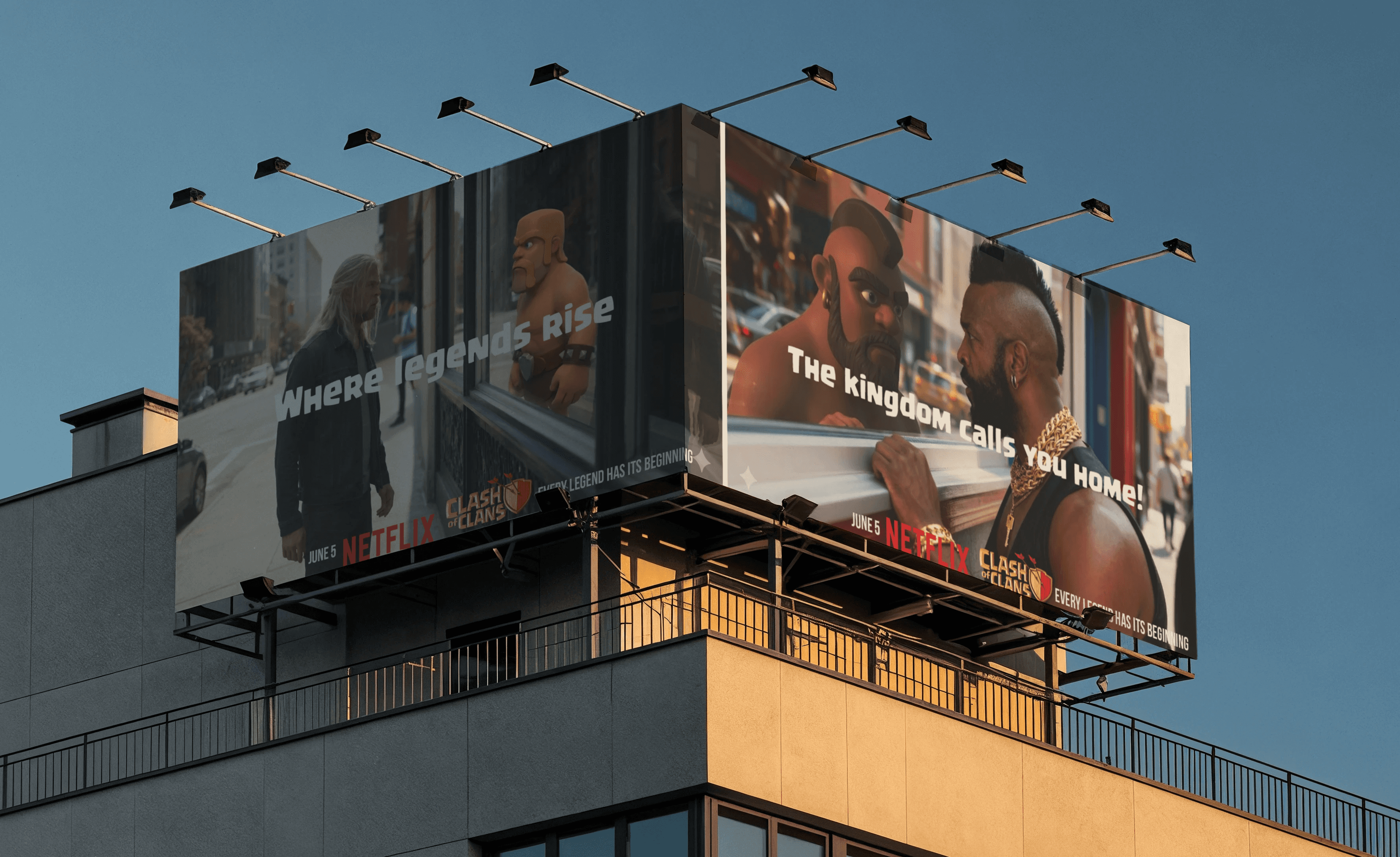
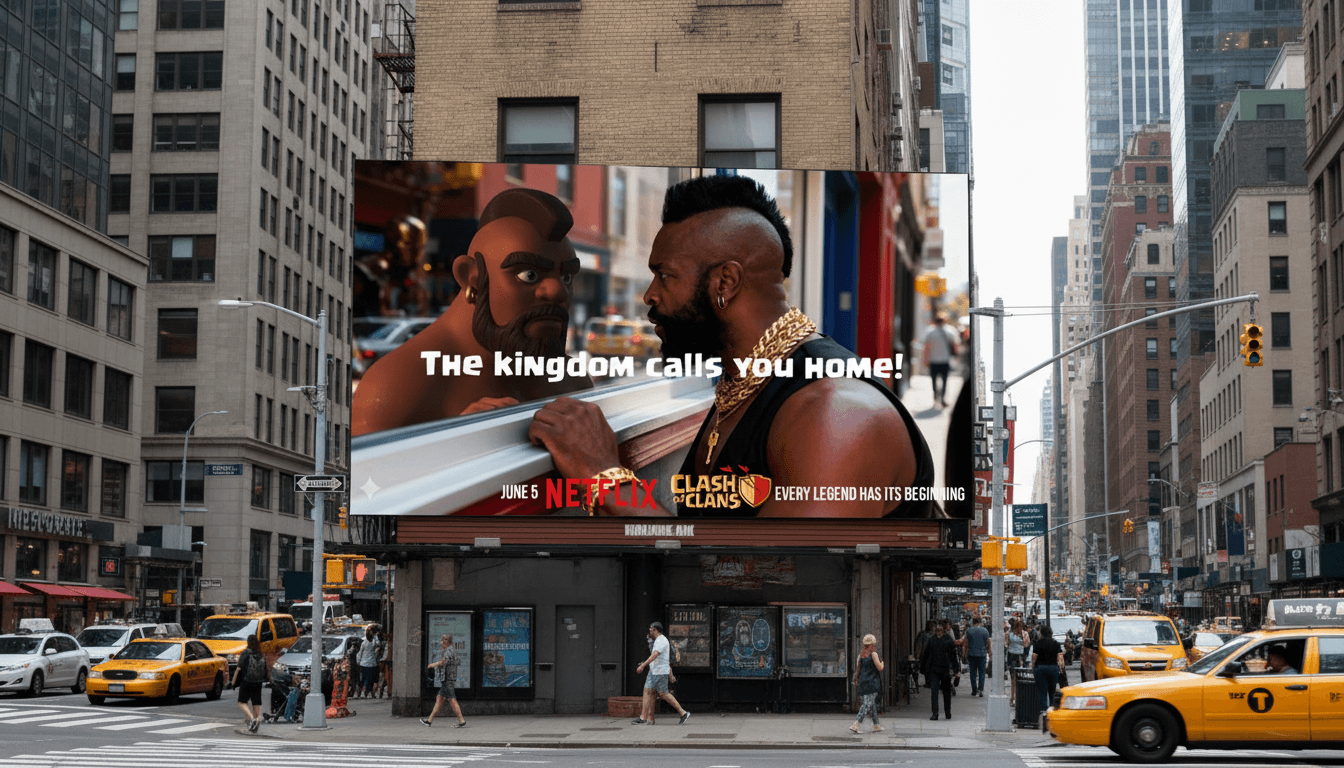
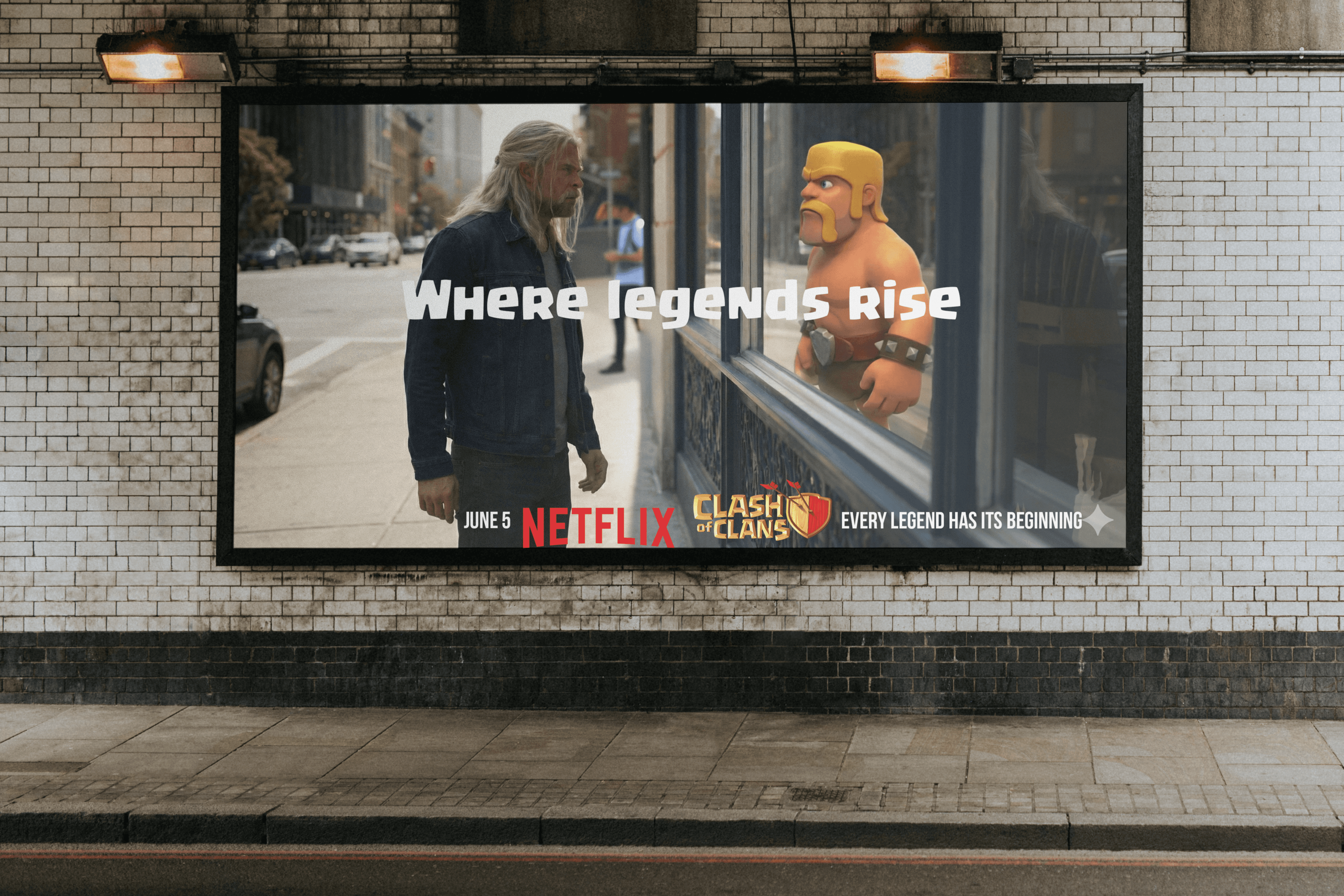
Faces of Clash uses famous people who visually resemble Clash of Clans characters and places them face to face with their in game counterparts in everyday city settings.
The scenes are framed like moments of recognition, as if the characters are seeing themselves reflected back from another world. The humor comes from the comparison itself, requiring no explanation. Large scale billboards place these encounters directly into the real world, reinforcing the idea that Clash lives beyond the screen.
The copy stays short and confident, lines like “Where legends rise” and “The kingdom calls you home” tie the real people to the fantasy world and support the Netflix launch without overpowering the visual idea.

Clash of Clans
Famous faces of Clash
Faces of Clash is an outdoor led campaign that blurs the line between the real world and the Clash of Clans universe. By pairing well known public figures with the in game characters they resemble, the campaign brings Clash into real life moments and reminds players that the game is more than just a mobile app.
The work was designed to reignite cultural relevance ahead of the Clash of Clans Netflix series and reconnect the game with both longtime fans and new audiences through humor, recognition, and nostalgia.
Problem?
Clash of Clans is one of the most iconic mobile games ever made, but years after its peak, it risks being remembered more as a legacy title than a living part of culture. While the player base is still active, especially among adults who grew up with the game, the brand needed a fresh way to re enter conversation without alienating its core fans.
The upcoming Netflix series presented an opportunity to reintroduce Clash of Clans as a cultural property, not just a game. The challenge was to do this in a way that felt self aware, funny, and relevant, rather than forced or overly promotional.